
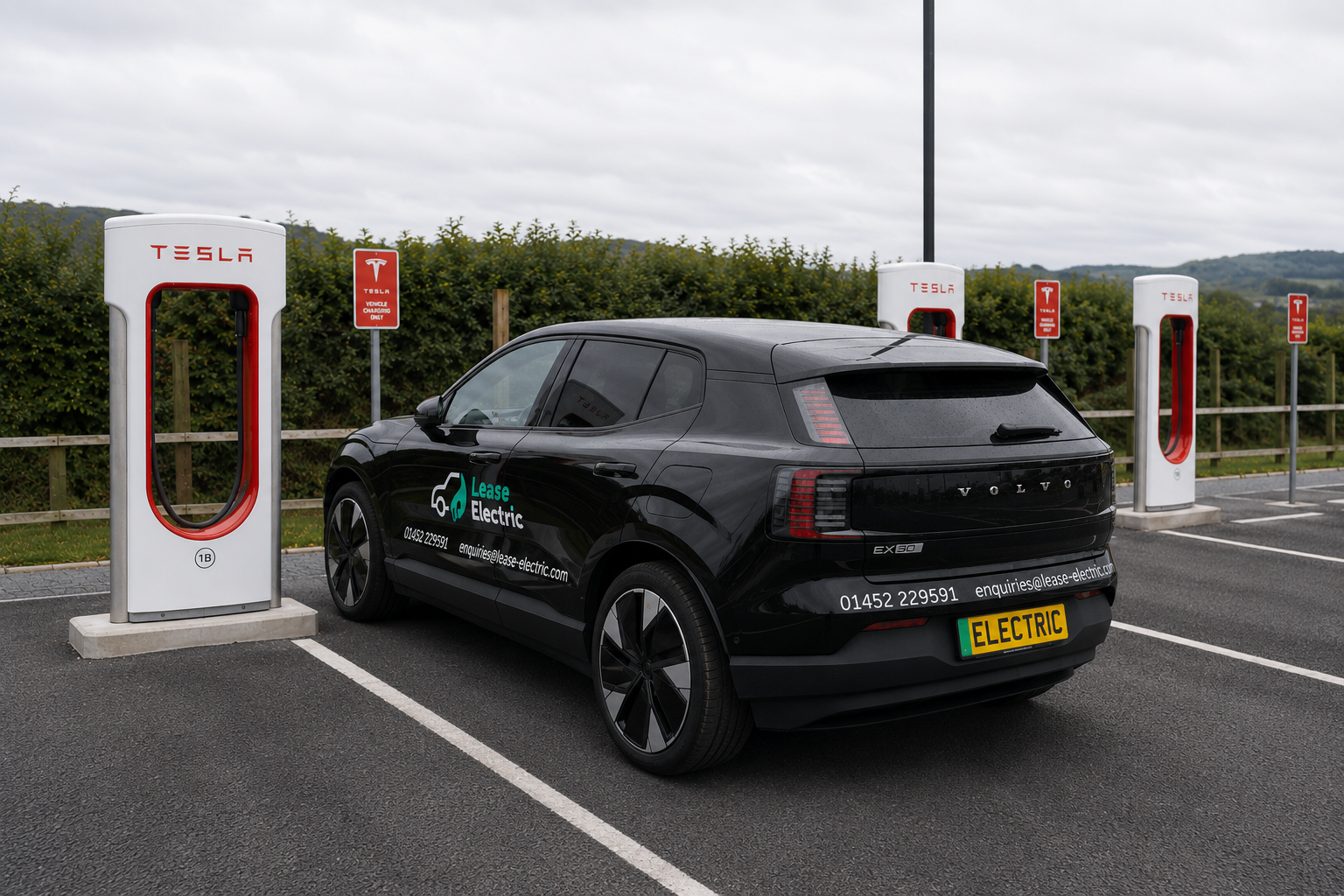
Volvo Cars has announced a significant expansion of charging access for its electric vehicle customers, confirming that drivers will soon be able to access more than 20,000 Tesla Supercharger stations across Europe directly through the Volvo Cars app.
The move represents another important step in simplifying the public charging experience and removing barriers to EV adoption, giving Volvo drivers access to one of the world's most extensive and recognised fast-charging networks.
From the fourth quarter of 2026, fully electric Volvo owners across Europe will be able to locate, access and pay for charging sessions at Tesla Supercharger locations through a seamless integration within the Volvo ecosystem.
Expanding Charging Confidence for EV Drivers
As public charging infrastructure continues to grow, accessibility and interoperability remain key priorities for both manufacturers and fleet operators.
By adding Tesla's Supercharger network to its existing charging platform, Volvo is significantly increasing charging options for customers across 29 European countries, including major markets such as the UK, Germany, France, Norway, Sweden, Italy and Spain.
The addition strengthens Volvo's already extensive charging network, which currently provides access to more than 1.2 million public charging points across Europe through the Volvo Cars app.
For businesses operating electric fleets, greater charging availability can help improve route flexibility, reduce downtime and provide drivers with increased confidence when travelling longer distances.
Eligible Volvo Models
The expanded charging access will apply to Volvo's latest generation of fully electric vehicles, including:
-
Volvo EX30
-
Volvo EX40
-
Volvo EC40
-
Volvo EX60
-
Volvo EX90
-
Volvo ES90
With charging infrastructure continuing to evolve across Europe and beyond, announcements such as this highlight the industry's ongoing commitment to making electric mobility more accessible, practical and convenient for both private and commercial users.
What This Means for Fleets
Reliable access to public charging remains one of the most important considerations for businesses transitioning to electric vehicles.
By expanding access to Tesla's fast-charging network, Volvo is helping to address concerns around charging availability while improving convenience for drivers operating across multiple regions.
For fleet operators, developments like this contribute to a more mature charging ecosystem, making it easier to deploy electric vehicles at scale and supporting the continued transition towards zero-emission transport.
As manufacturers, charging providers and industry stakeholders continue to work towards greater interoperability, electric vehicle drivers can expect a simpler and more connected charging experience in the years ahead.
Supporting the Transition to Electric Mobility
According to Alejandro Castro Pérez, Head of Energy Solutions at Volvo Cars, the company's focus remains on making electric vehicle ownership as straightforward as possible.
Volvo drivers already have access to more than three million charging points globally through the Volvo app, with Tesla Superchargers now becoming part of that growing network.
The integration supports Volvo's wider electrification strategy by helping create a more unified and user-friendly charging experience, allowing drivers to access multiple charging providers through a single platform.
Future Expansion Planned in Asia-Pacific
Alongside the European rollout, Volvo Cars has also announced plans to adopt the North American Charging System (NACS) standard in selected Asia-Pacific markets, including Japan and South Korea.
The transition is expected to take place by 2029 and will enable future Volvo electric vehicles in those markets to access Tesla's charging infrastructure, further supporting charging standardisation and interoperability.
While further details on specific vehicle models and launch timings are yet to be confirmed, the move reflects a wider industry trend towards common charging standards designed to simplify EV ownership.