

With over one million electric vehicles (EVs) on UK roads, there is a growing curiosity about their safety for drivers, pedestrians, and other road users. To assist you in transitioning to electric, we have addressed some of the most commonly asked questions regarding EV safety.
Its important to remember, that Before an EV can be sold or registered in the UK, manufacturers must provide evidence of compliance with international approval requirements. This assessment includes thorough evaluations of fire and electrical safety.
However, concerns typically focus on EV batteries and crash scenarios. The pertinent question is whether an EV is more dangerous compared to internal combustion engine (ICE) vehicles.
Safety Tests
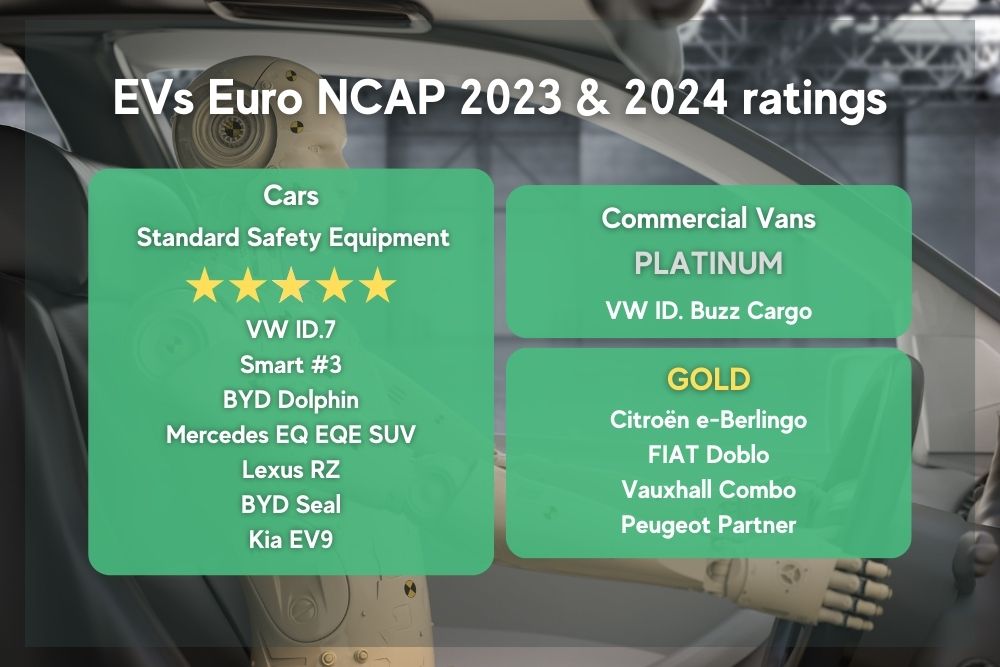
Alongside the required safety checks, Manufacturers often subject their EVs to crash tests conducted by independent bodies like Euro NCAP to provide an overall safety rating for each model, helping consumers choose the safest option.
This safety rating is determined through a series of vehicle tests conducted by Euro NCAP. These tests simulate crucial real-life accident scenarios that could cause harm to car occupants or other road users.
The star rating system reflects the car's performance in Euro NCAP tests and is also influenced by the safety features offered by the vehicle manufacturer in each market. A high star rating indicates not just a good test result but also the availability of safety equipment to consumers in Europe. The star rating surpasses legal requirements, and not all new vehicles are required to undergo Euro NCAP tests.
The five-star safety rating evolves as technology advances, with regular test updates, addition of new tests, and adjustments to star levels. Therefore, the test year is essential for correctly interpreting the car's safety result.
- 5 Star Safety: Excellent crash protection performance with comprehensive crash avoidance technology
- 4 Star Safety: Good crash protection performance with potential crash avoidance technology
- 3 Star Safety: Average occupant protection with limited crash avoidance features
- 2 Star Safety: Basic crash protection without advanced crash avoidance technology
- 1 Star Safety: Marginal crash protection and minimal crash avoidance technology
- 0 Star Safety: Meets legal standards but lacks essential modern safety technology
In 2021, Euro NCAP introduced Commercial Van Safety Ratings, focusing on the availability and performance of advanced driver assist systems (ADAS) for light commercial vans weighing up to 3.5 tonnes. Each van undergoes ADAS testing based on Euro NCAP Safety Assist protocols, with a typical load for daily commercial use. Additionally, a Seat Belt Reminder (SBR) check is conducted for each van.
Based on the weighted overall performance score, commercial vans receive ratings of Platinum, Gold, Silver, Bronze, or Not Recommended. The test and assessment protocols were updated in 2023 to align with market progress since 2021. Euro NCAP revises commercial van ADAS ratings annually, considering the latest protocols and equipment from manufacturers.
- Platinum: 80% or higher
- Gold: 60% or higher
- Silver: 40% or higher
- Bronze: 20% or higher
- Not Recommended: Below 20%
Euro NCAP | The European New Car Assessment Programme
Safety in an Accident
Electric vehicles (EVs) are constructed to meet the same safety standards as internal combustion engine (ICE) cars, making them equally safe in collisions. In accidents, EVs often provide better protection to occupants than traditional models due to their design and safety features.
EV Design:
- Electric vehicles do not feature a bulky engine block in the front. This design enables larger crumple zones to absorb energy from frontal collisions more efficiently, potentially lowering the chances of injury.
- In comparison to ICE EVs have a lower centre of gravity. The placement of the batteries in the floor of the vehicle helps to reduce the risk of roll-over accidents and improves vehicle stability.
- They often also have advanced stability control systems which can detect and reduce loss of traction.
EV Batteries - are they a fire risk?
While lithium-ion batteries, the most common type in electric vehicles (EVs), can pose a fire risk, there is no evidence to suggest that EV fires occur more frequently than in petrol or diesel vehicles. Limited UK data on this matter, alongside international studies, indicate that electric vehicle fires are actually less common than those involving traditional vehicles. For example, from 2016 to 2021 in Norway, a leading EU market for EVs, petrol or diesel vehicles were linked to four times more fires than electric vehicles.
Firefighters do encounter challenges when dealing with EV fires due to the intense burning and potential for reignition of lithium-ion batteries. Nevertheless, as EV numbers increase, specialised procedures and guidelines are being developed to assist emergency services in effectively handling such incidents.
To mitigate this risk, many electric vehicles are equipped with various safety features, including:
- Battery Management System (BMS) that monitor performance and regulate temperature to avoid fires caused by overheating.
- Post-Collision Battery Disconnect a system that automatically disconnect the battery following a collision.
EV Safety in Various Weather Conditions
EVs are designed engineered to withstand the range of weather conditions we experience throughout the year.
Similar to driving an internal combustion engine (ICE) vehicle, it is crucial to heed guidance when driving in challenging weather.
While heavy rain doesn't harm the EV battery or other electrical components, caution is still necessary when driving in wet conditions. Wet roads can lead to aquaplaning and reduced visibility. Adjusting your speed, avoiding high water levels, and staying vigilant are essential for road safety.
In icy conditions, it is advisable to avoid sudden acceleration, braking, or steering to prevent losing control of your EV.
EVs are also safe to drive during weather occurrences such as lightning. When lightning strikes, the vehicle acts as a Faraday cage, directing the electric current through the metal frame, tires, and into the ground, shielding occupants from harm. Therefore, remaining inside your EV during lightning is safer than being outside.
EV Charging Safety
When considering the safety of charging an electric vehicle, it's natural to have concerns given the general caution advised when handling electricity, but EVs have be designed to ensure that charging is safe.
What about charging in the rain?
Concerns about the potential hazards of combining electricity with water are valid, yet contrary to common misconceptions, it is safe to charge in the rain.
EVs, along with their associated cables, adapters, and charging points, are designed to endure the diverse weather conditions we experience throughout the year.
Whether at home or at public locations, the outdoor-friendly design of EV charging points ensures their safety. Upon connecting the charger or cable, electricity remains dormant. Only after safety checks are completed, electricity flows, and the charging process begins.
It is reccomended that, where possible, you have a dedicated home chargingpoint installed. Professionally installed home chargers usually come equipped with built-in weatherproofing, boasting high IP (Ingress Protection) ratings that make them suitable for outdoor use. For instance, the Pod Point Solo charger, with an IP rating of 54, is highly resistant to both water ingress.
What about 3-pin EV chargers?
If you are unable to install a home charger, using 3-pin plugs is often considered a solution. When using a 3-pin plug for charging your car. Avoid using extension leads for car charging as they are not designed for this purpose and can overheat. Keep the charging block and plug inside and remember to adjust the charge rate on your car, typically found in the charging section of your infotainment menu.
What about people with pacemakers?
Concerns have been expressed about individuals with pacemakers and defibrillators using high-powered EV chargers. There is a fear that the electromagnetic current from these chargers, particularly high-powered rapid chargers delivering up to 350kWh, could disrupt the functioning of these cardiac devices.
However, a recent cardiology study (2023) concluded that there is no evidence of chargepoints interfering with pacemakers or defibrillators. Therefore, it is safe for individuals with these devices to use home chargers as well as fast or rapid chargers.
Are electric cars dangerous to pedestrians?
Electric vehicles are notably quieter than traditional ICE cars, especially when driving at lower speeds. The decreased noise level poses a risk to pedestrians as they might not hear an approaching EV in time.
To tackle this issue, the UK government implemented a law in 2019 mandating new EVs to have an Acoustic Vehicle Alerting System (AVAS). This system produces sound when the vehicle is traveling below 20 km/h (approximately 12 mph) to warn pedestrians and cyclists.
Nevertheless, enhancing pedestrian safety involves more than just increasing the noise of EVs. Factors such as driving speed, driver conduct, and safety technologies are crucial. EVs often are equipped with emergency braking systems to reduce the risk of accidents involving pedestrians and other vehicles.