

If you’re considering leasing your first EV, adding EVs to your fleet or even replacing your existing electric vehicle, you might have come across the 80/20 rule. Many manufacturers will advertise charging times for 20% to 80%, but why is that the case and is it safe to charge past 80%?
Optimising EV Battery Health
The 20-80% charge range is considered most efficient for lithium-ion batteries. Lithium-ion batteries degrade over time, affecting EV battery life (just like in mobile phones and laptops). Charging to 80% can optimise battery health and enhance the life span of your EVs battery.
Managing Charging Levels & Time
Most EVs have controls, which allow you to adjust the charging percentage. Setting this to 80%, especially when at a public charging station will increase efficiency and reduce cost. Because chargers restrict charging speeds once the vehicle reaches 80% in order to protect the battery, charging from 10-80% often takes as long as charging from 80-100%.
The time it takes to charge an EV, is often advertised by the manufacture. At Lease Electric, we display this information for each vehicle under ‘ Technical Data’. However, using this calculation will give you an estimated charging time:
Battery Capacity / Charging Speed = approximate time needed to charge from 0% - 100%.
Example:
|
Car |
Charging Speed | 0-100% (estimate) |
|
Kia EV 6 166 kW GT Line S 77.4kWh Electric Range: 313miles (WLTP) |
7kW 50kW |
11 hours 1hours 55 minutes |
If you're charging to 80%, approximate charging times can be found under 'technical data'.
Example:
|
Car |
Charging Speed | Figures from Technical Data |
|
Kia EV 6 166 kW GT Line S 77.4kWh Electric Range: 313miles (WLTP) |
350kW |
18 minutes |
Plugging into a charger that charges at a higher rate than your EVs maximum charge rate won't speed up charging as the vehicle determines the rate.
Is it safe to charge an EV to 100%?
Charging up to 100% is safe, but regularly charging your EV to 100% could have an impact on future battery capacity. Most electric vehicle batteries have warranties of around 8 years (or 100,000 miles), but are expected to last much longer.
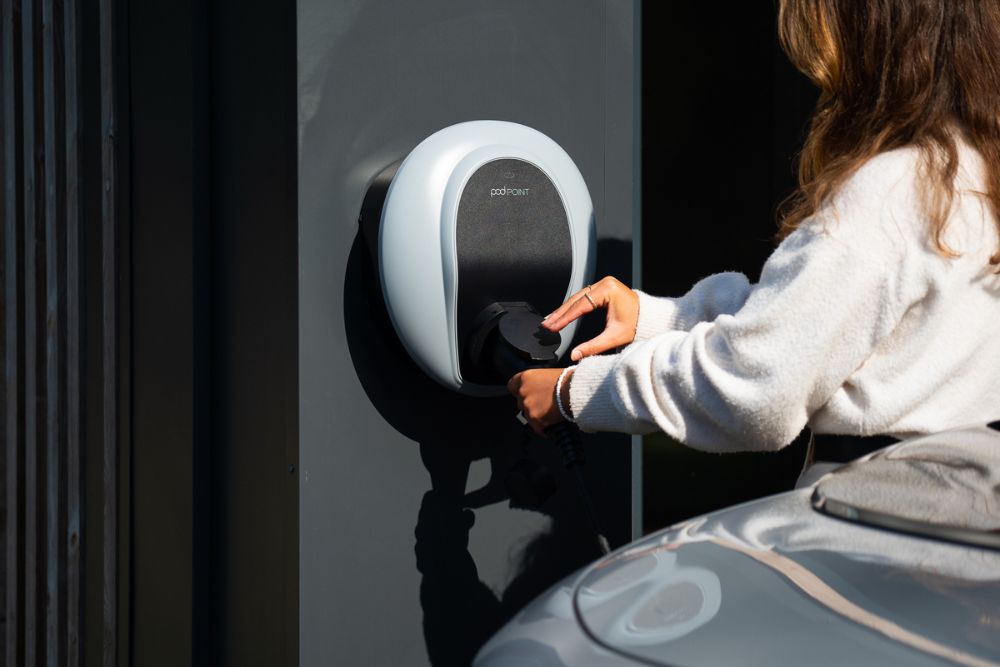
If you’d like to charge to 100%, before a long journey, it is recommended to use a slower charger ( such as a 7kW) as it will put less stress on the battery. Dedicated Home chargers, such as Pod Point’s Solo 3 include numerous safety features to keep your car home safe, automatically balancing the power drawn by your chargepoint with the rest of your home.
Scheduling your car either via the Pod Point App or the car itself, to charge during off-peak hours can save on electricity costs depending on your tariff. With a dedicated home charger, charging stops automatically when the battery is full.
Whilst Manufacturers are constantly improving battery technologies, instead of letting the battery drain and charging from 0% to 100%, it's advisable for drivers to maintain their EV's charge between 20-80%.